
Custom Silicone Extruded Seals
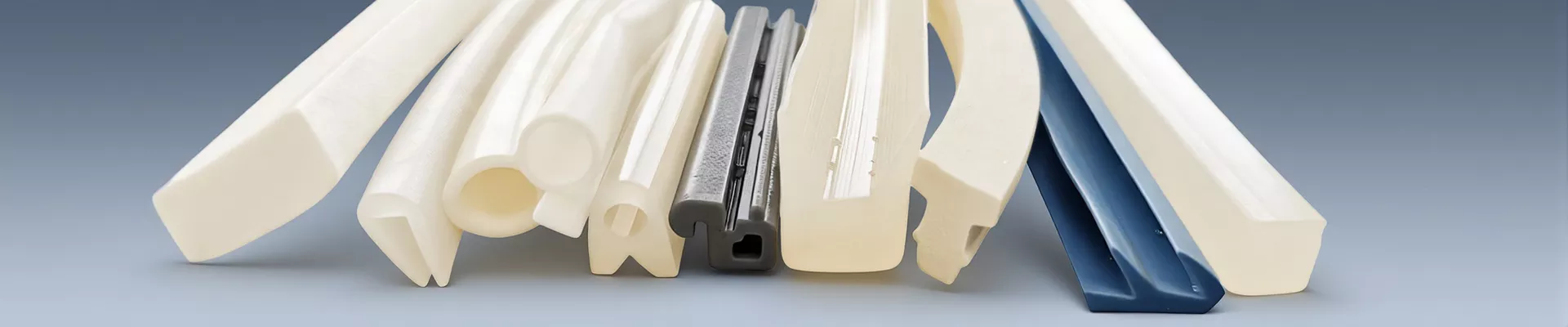
Profiles With Post Processing
Profiles With Post Processing
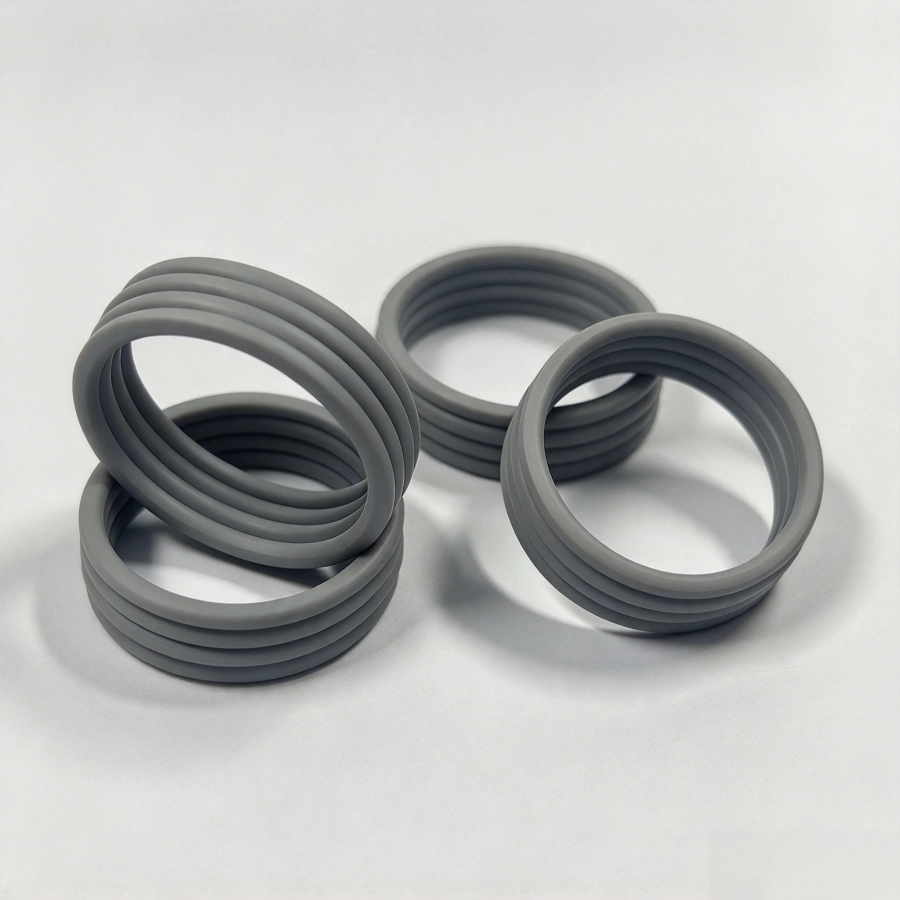

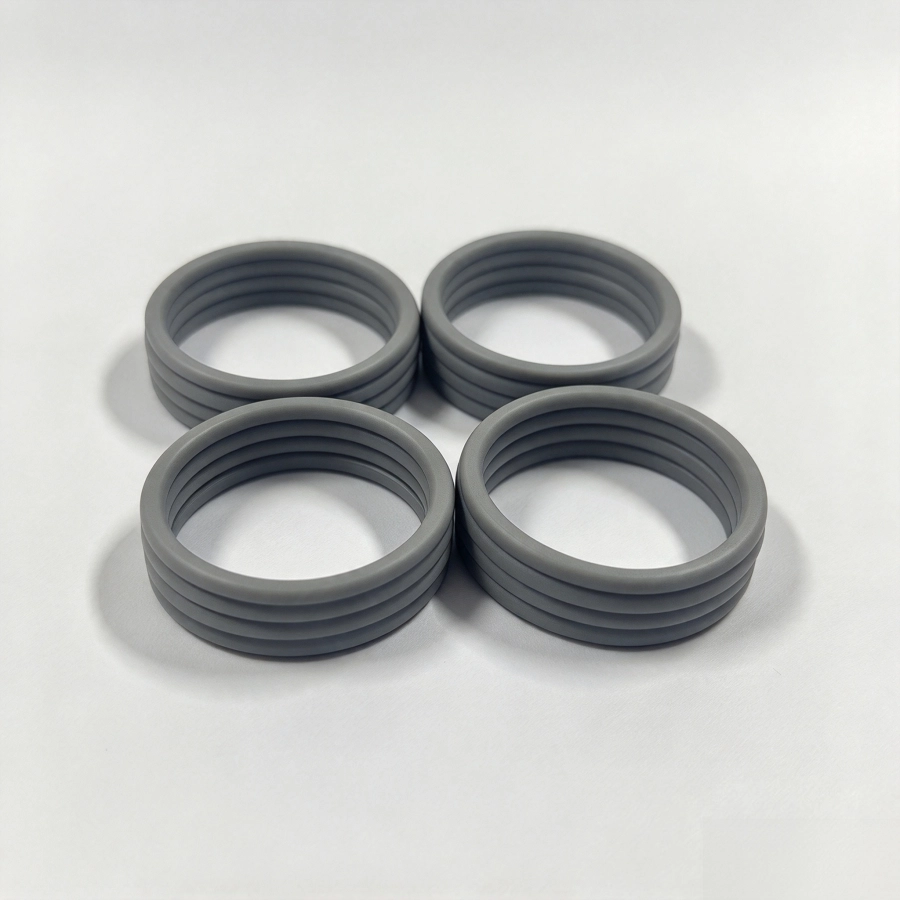
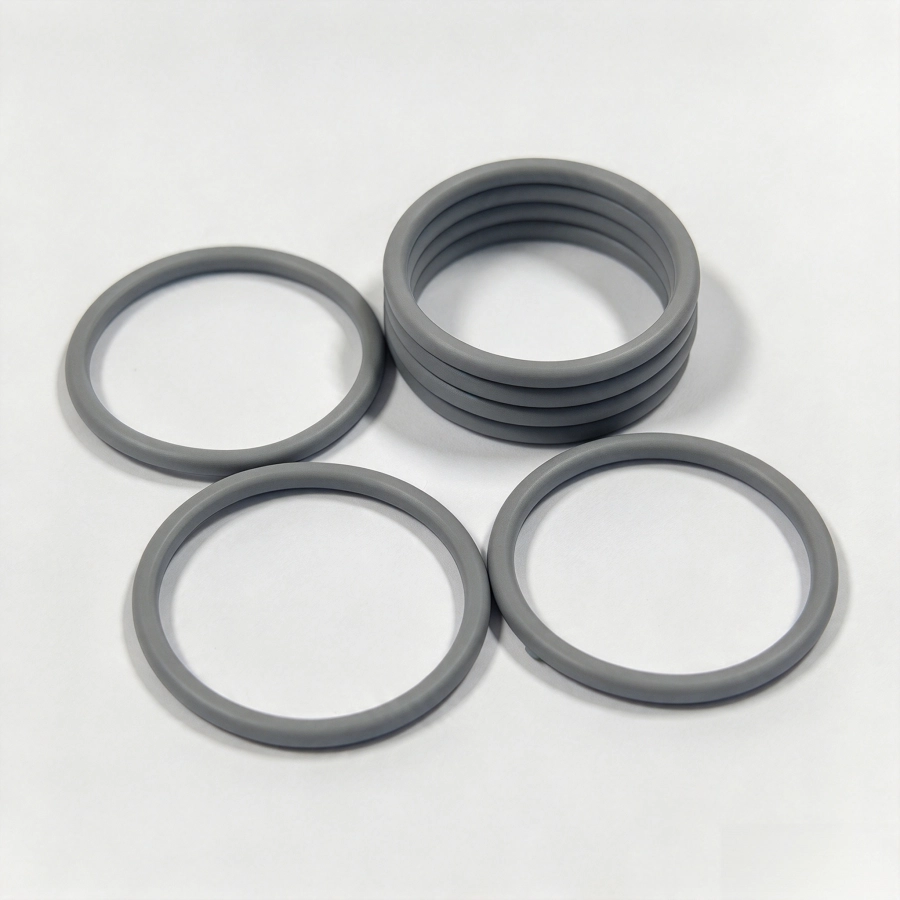
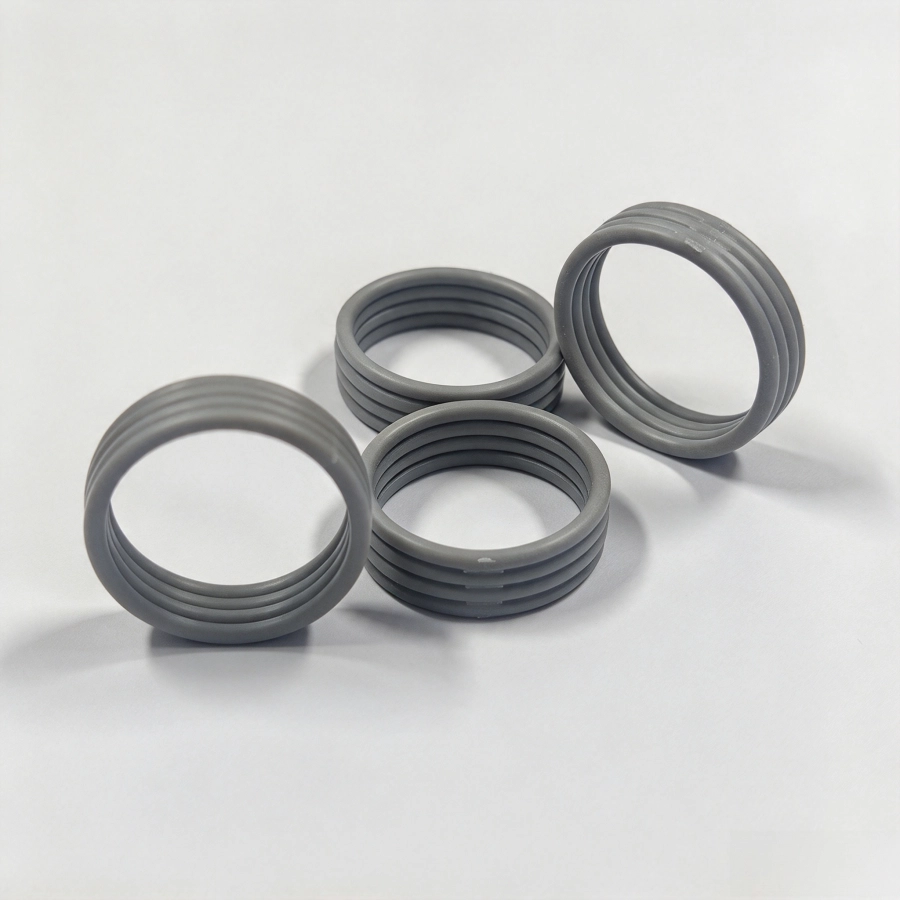

Closed cell foam silicone sponge O-Ring gaskets for car parts provide lightweight, compliant sealing for selected automotive electronic and exterior components. Made from closed-cell VMQ silicone sponge, these rings offer low closing force, elastic recovery, cushioning and thermal insulation. They can help fill housing gaps, reduce dust ingress and buffer vibration when the gasket is correctly designed and compressed within a suitable enclosure. Custom inner diameters, cross-sections, colors and material options can be discussed according to your drawing and operating conditions.
These automotive silicone sponge O-rings are intended mainly for low-pressure air sealing, dust protection and moisture management in applications such as camera housings, miniature sensors, HVAC components and auxiliary lamp assemblies. Actual sealing performance depends on the foam grade, joint design, compression ratio, surface condition and assembly tolerances. They are not intended for high-pressure hydraulic systems or direct contact with engine oil, gasoline or strong solvents.
Youtube video
How the co extruded silicone o ring gaskets made by fully automatic bonding machine
Youtube video
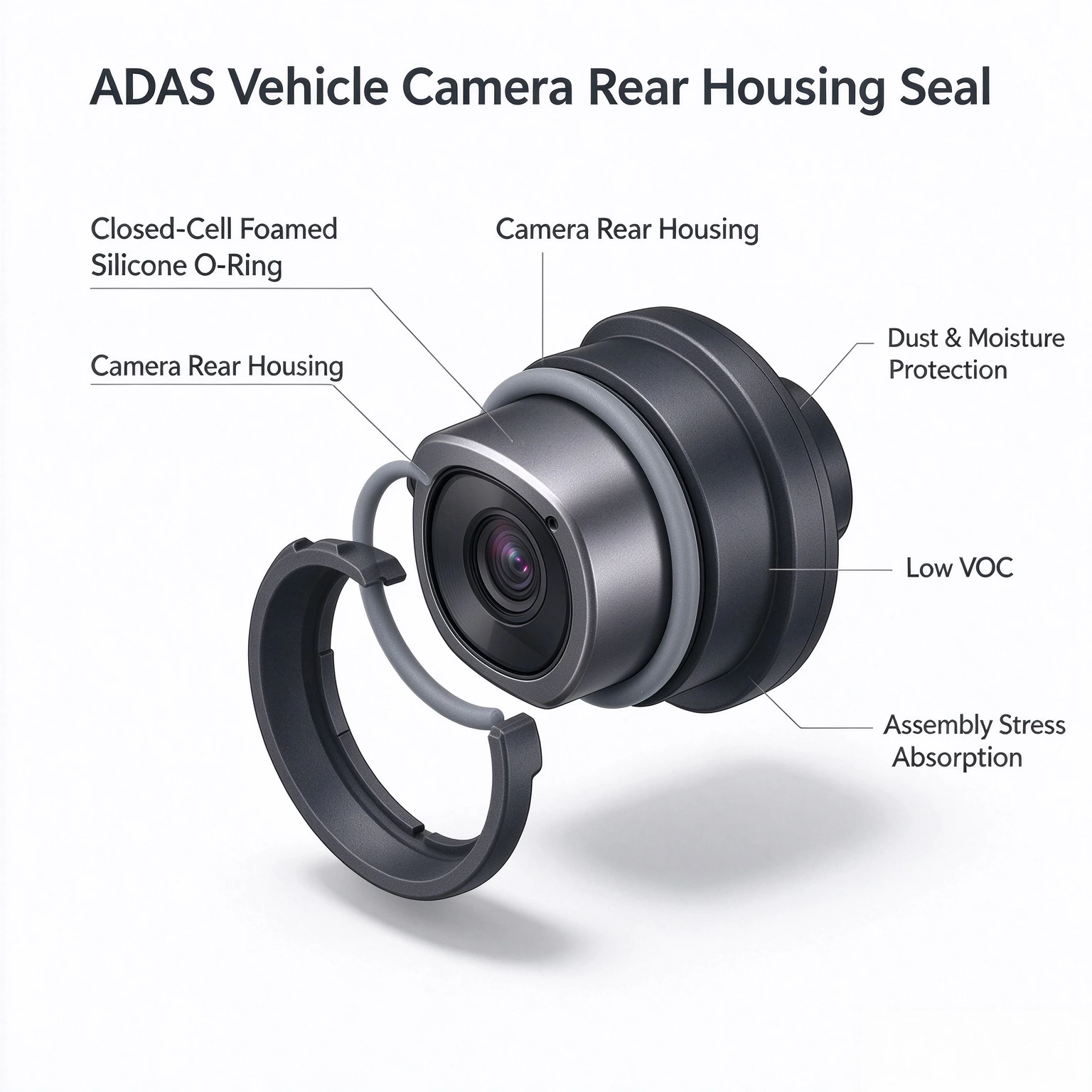
A compliant closed-cell silicone foam gasket can be used between compatible camera-housing parts to help close assembly gaps and reduce the entry of dust and environmental moisture. The final design should be validated for the camera enclosure, required protection level, temperature range and compression conditions.
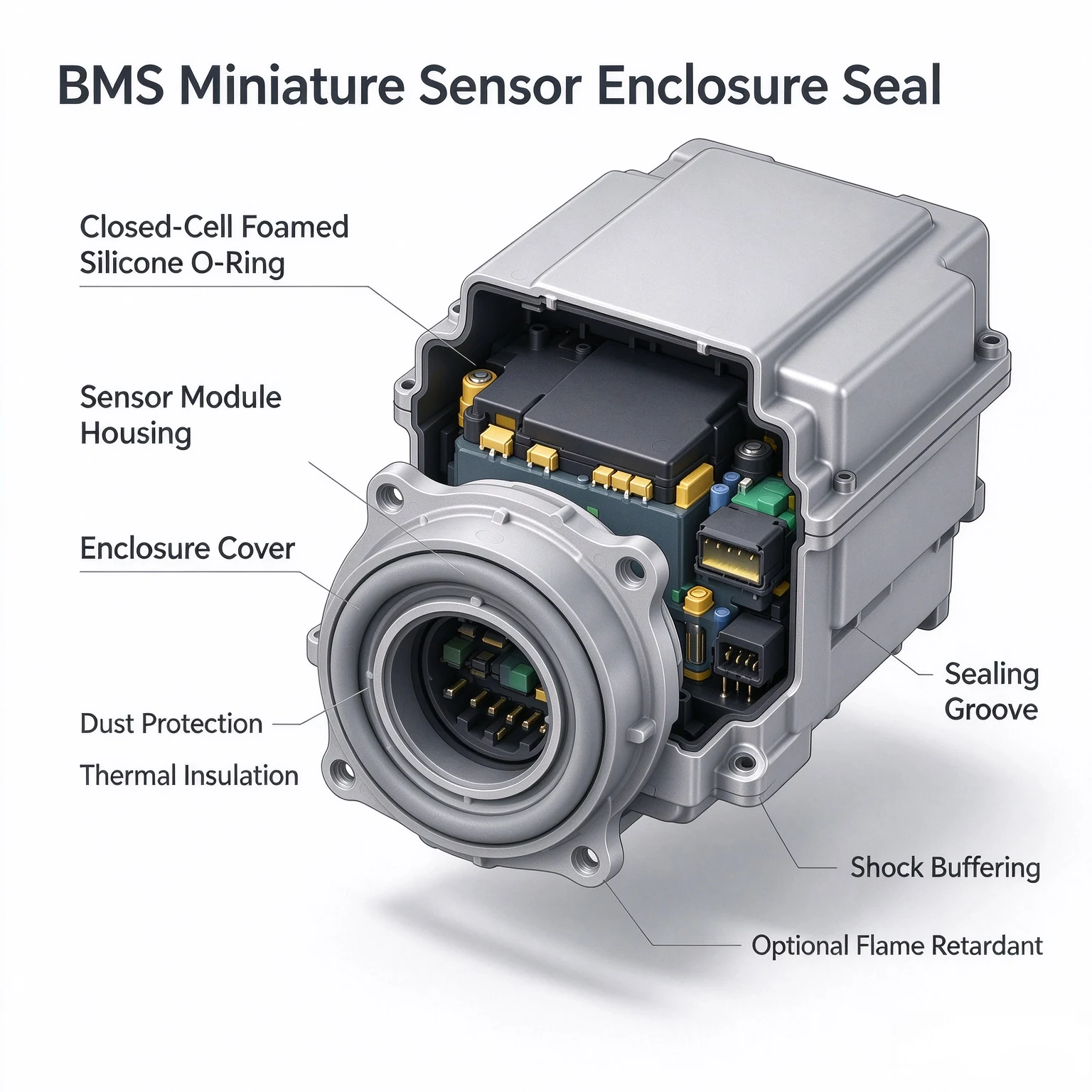
For selected BMS electronic enclosures and compact sensor housings, silicone sponge O-ring gaskets can provide cushioning and a low-force seal around covers or interfaces. Material selection should consider the enclosure design, flame-retardancy needs, outgassing requirements and the vehicle manufacturer’s specifications.
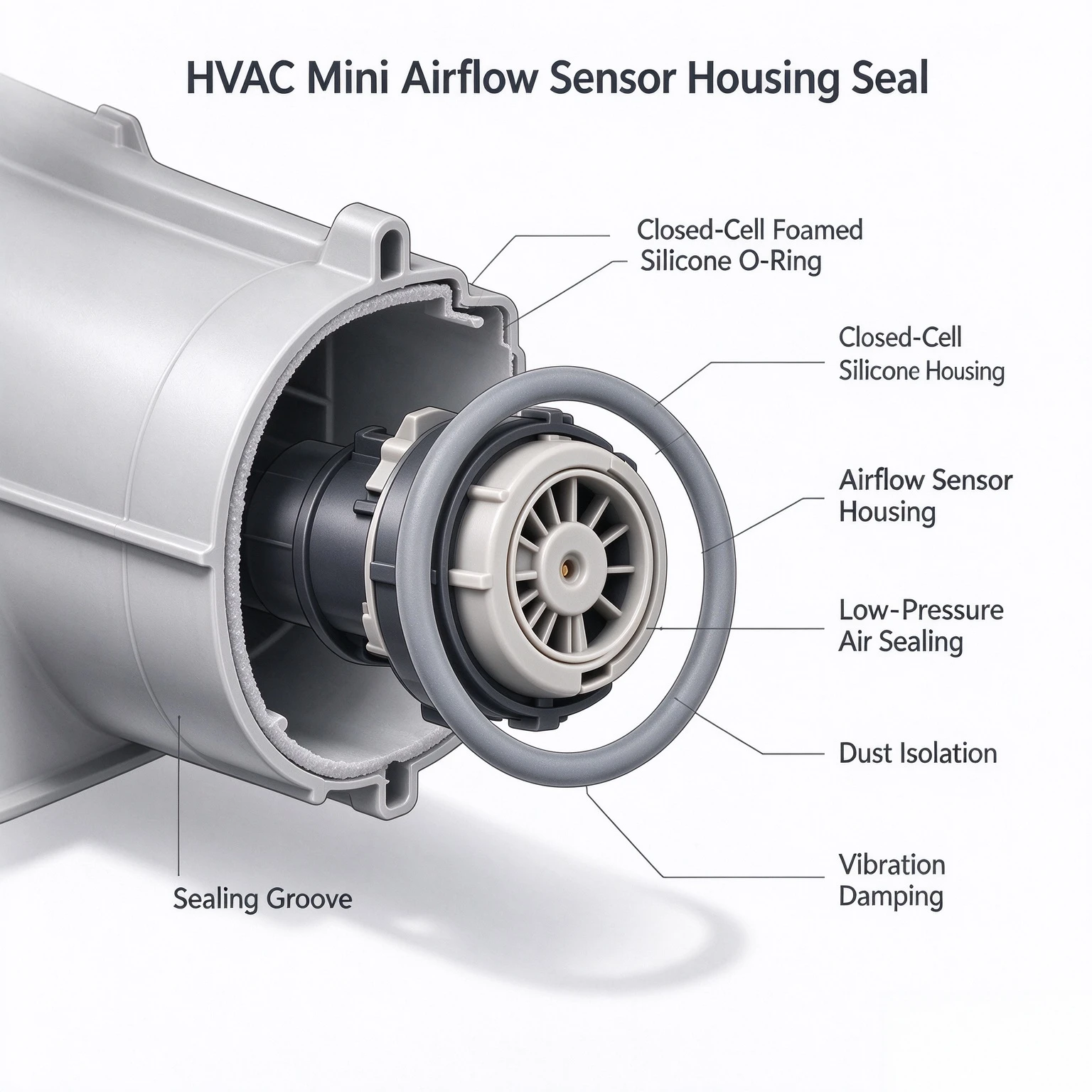
In HVAC sensor housings and other low-pressure air-handling components, the gasket can help seal the interface and reduce unwanted air leakage or dust ingress. Confirm compatibility with the actual temperature, humidity and media exposure before production.
Closed-cell silicone foam gaskets can be considered for selected auxiliary lamp and mini fog-lamp housings. Their weathering resistance and compliant structure may help maintain contact between housing surfaces. The gasket design and compression must be validated to meet the required moisture-protection level and to minimize the risk of lens fogging.
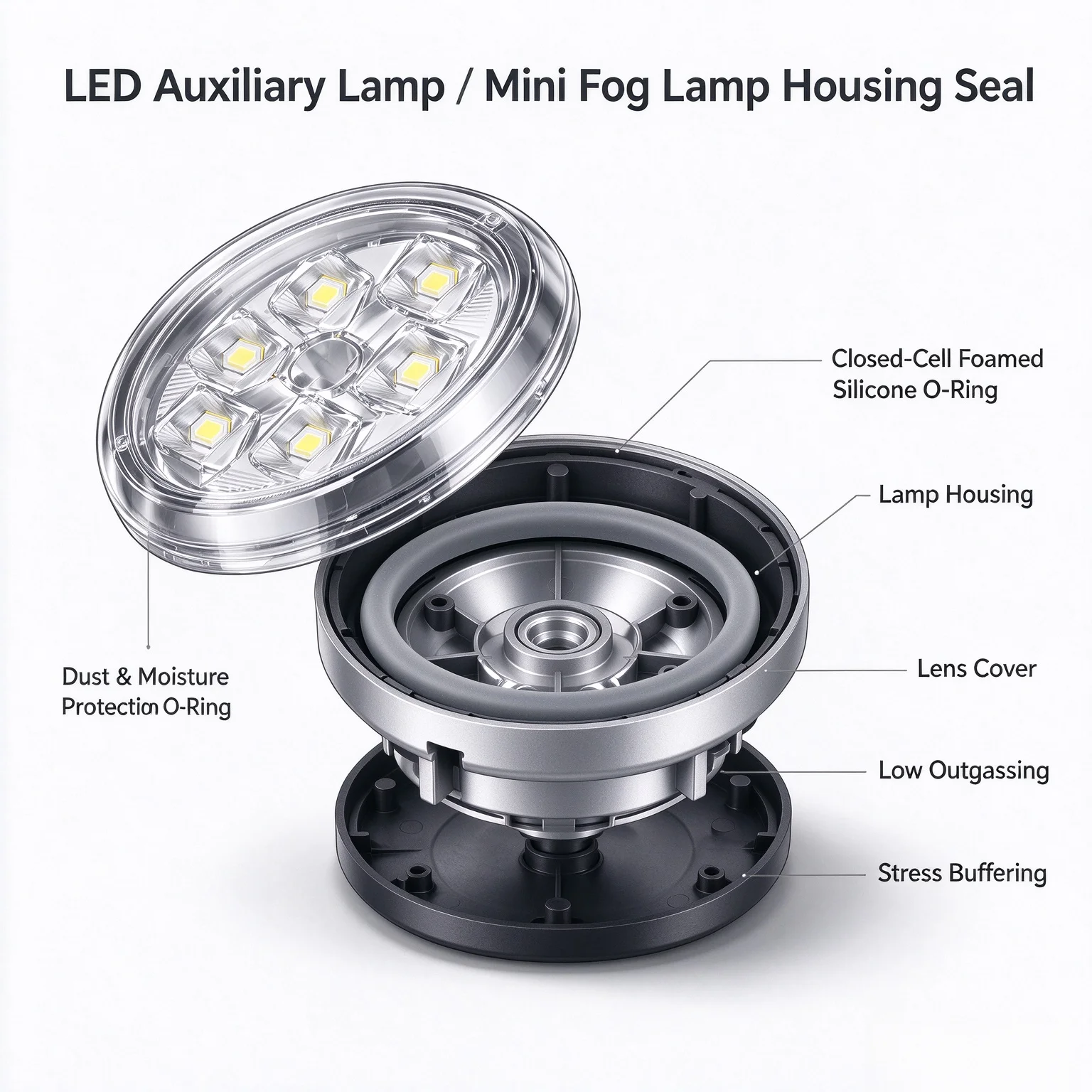
The following values are reference specifications from the current product information. Final properties and compliance should be confirmed against the selected compound, approved drawings and required test methods.
|
Item |
Specification |
Remarks |
|
Base Material |
VMQ silicone rubber, closed-cell foam structure |
Low-outgassing formula may be available for automotive electronic parts |
|
Color |
Grey, black, white or custom colors |
Grey is commonly used for automotive electronics |
|
Density |
0.35–0.65 g/cm³ |
Suggested range for automotive sealing: 0.45–0.55 g/cm³ |
|
Hardness |
20–45 Shore 00 |
Sponge silicone; not Shore A |
|
Compression Set |
≤15% (25% compression, 100°C, 22 h) |
Confirm test method and compound-specific data |
|
Recommended Compression Ratio |
20%–40% |
Avoid exceeding 45% unless validated to reduce permanent deformation risk |
|
Continuous Operating Temperature |
-50°C to +200°C |
Short-term peak up to 220°C, subject to material validation |
|
Weather Resistance |
Good ozone, UV and aging resistance |
Suitable for evaluation in exposed or exterior applications |
|
Flame Retardancy |
Optional UL 94 HB / UL 94 V-0 |
Select according to the applicable component requirements |
|
VOC & Outgassing |
Low-volatile formula may be available |
Verify the required automotive test standard and results |
|
IP Rating |
IP54–IP65 may be achievable with suitable enclosure design |
Requires system-level testing; not suitable for high-pressure immersion |
|
Water Absorption |
≤1% stated for closed-cell structure |
Confirm test method and material grade |
|
Odour Grade |
Low-odour compound may be available |
Confirm compliance with the customer’s interior odour specification |
|
Dimensional Tolerance |
To drawing; ISO 3601 / GB/T 3452.1 or custom tolerance may be discussed |
Confirm applicability to the sponge profile and finished ring |
|
Compliance |
RoHS, REACH; IATF 16949 supply-chain support on request |
Request current declarations and supporting documents |
|
Compatible Media |
Air and water vapor |
Not recommended for mineral oil, gasoline or strong solvents |
The soft sponge structure conforms to suitable mating surfaces under controlled compression. It can help accommodate minor surface variations and fill gaps in low-pressure sealing applications while requiring less closing force than many solid-rubber designs. Correct groove or housing dimensions are essential for consistent results.
Silicone rubber is valued for its resistance to aging, ozone and a broad temperature range. This makes selected silicone sponge grades worth evaluating for exterior housings, vehicle lamps and other components exposed to changing environmental conditions. Confirm the operating range and durability with application-specific testing.
The gasket’s inner diameter, cross-section, color and profile can be customized to the customer’s drawing and sealing space. A suitable specification should define dimensional tolerances, compression, joint position and the required inspection criteria before mass production.
For rings made by cutting and joining extruded silicone sponge profiles, controlled cutting length and a well-matched bonding mold help produce repeatable joints. Joint alignment and strength depend on the profile, adhesive or bonding process, curing conditions and machine setup, so samples should be inspected and validated against agreed acceptance criteria.
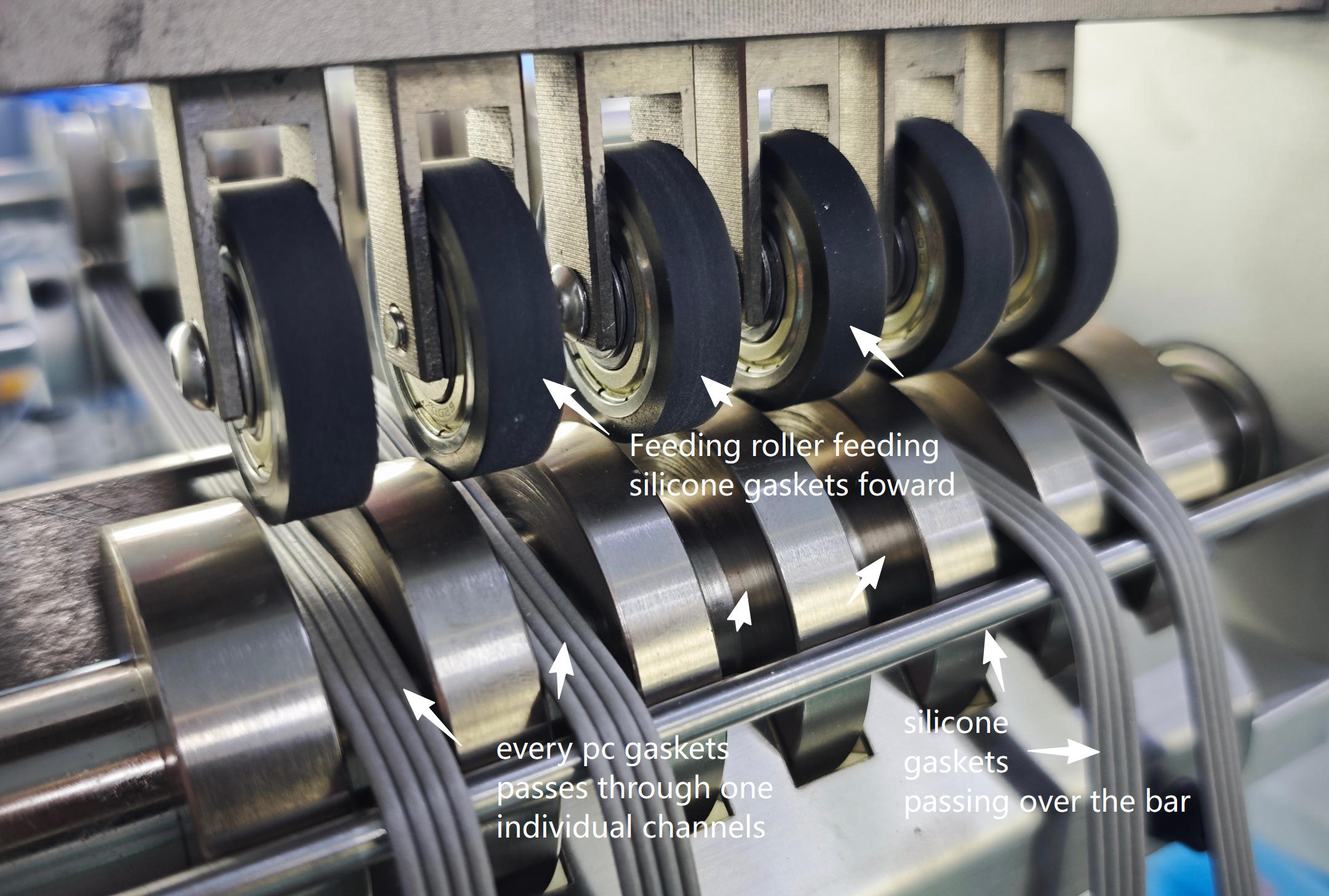
Multiple co-extruded silicone gasket profiles can be fed and cut in one cycle; the described setup can feed up to six pieces simultaneously. Controlled feeding helps limit unnecessary tension and supports repeatable cutting lengths. Actual accuracy depends on the profile, material condition and machine settings.
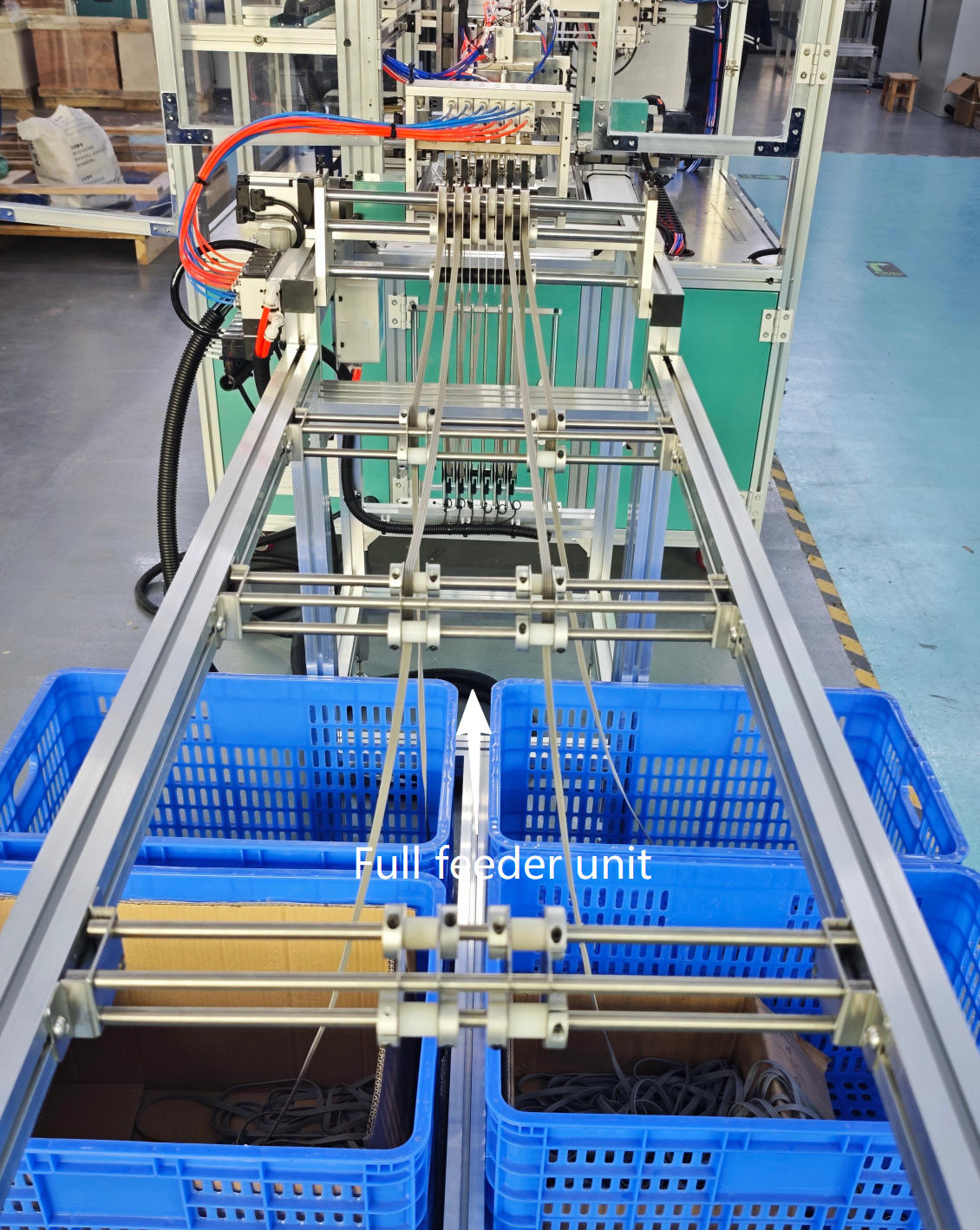
It avoids tension during feeding process and maintains cutting length precision .
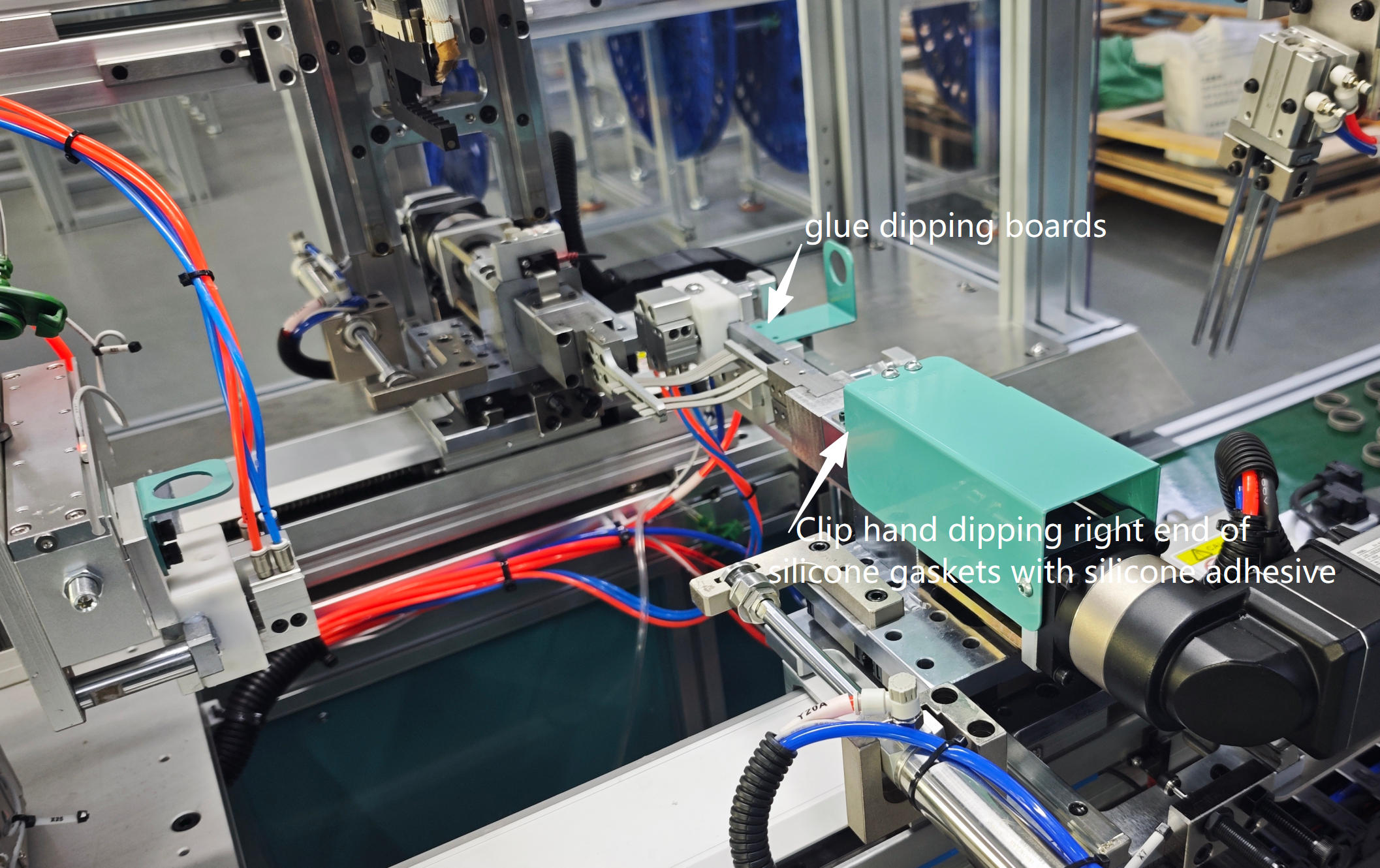
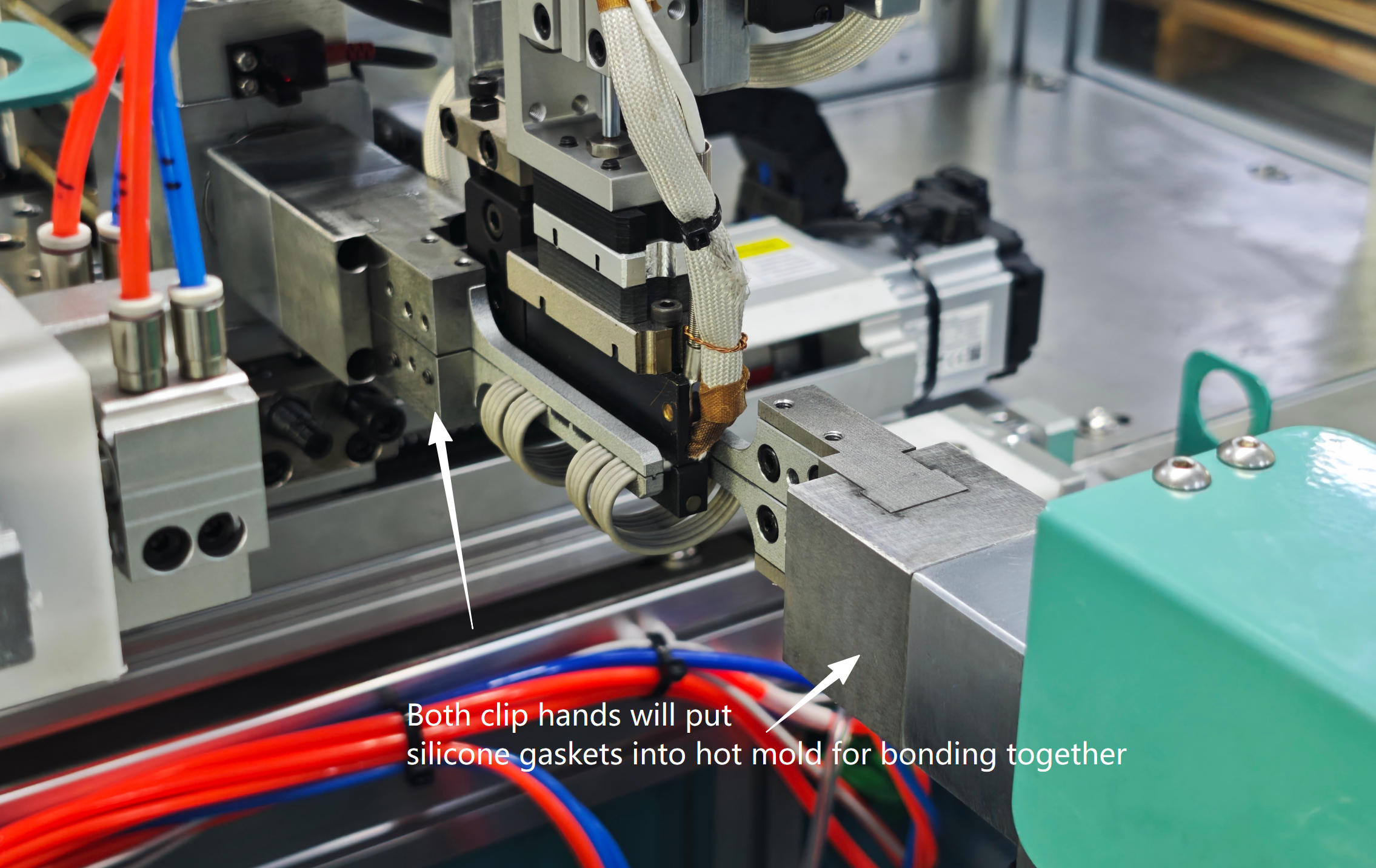
Adhesive is applied to both ends of each cut profile before the ends are placed in a matched hot mold. The current process description specifies bonding at approximately 180°C for 5–8 seconds. These settings are starting references only and should be verified for the selected silicone compound, adhesive and profile size.
A mold cavity matched to the gasket dimensions helps align the ends and reduce visible displacement at the joint. Bond quality should be assessed using agreed visual, dimensional and strength checks.
After bonding, the finished silicone sponge O-ring is discharged from the mold. Recommended checks include inner diameter, cross-section, joint alignment, cutting consistency and visible defects. Inspection criteria should be defined based on the customer drawing and intended application.
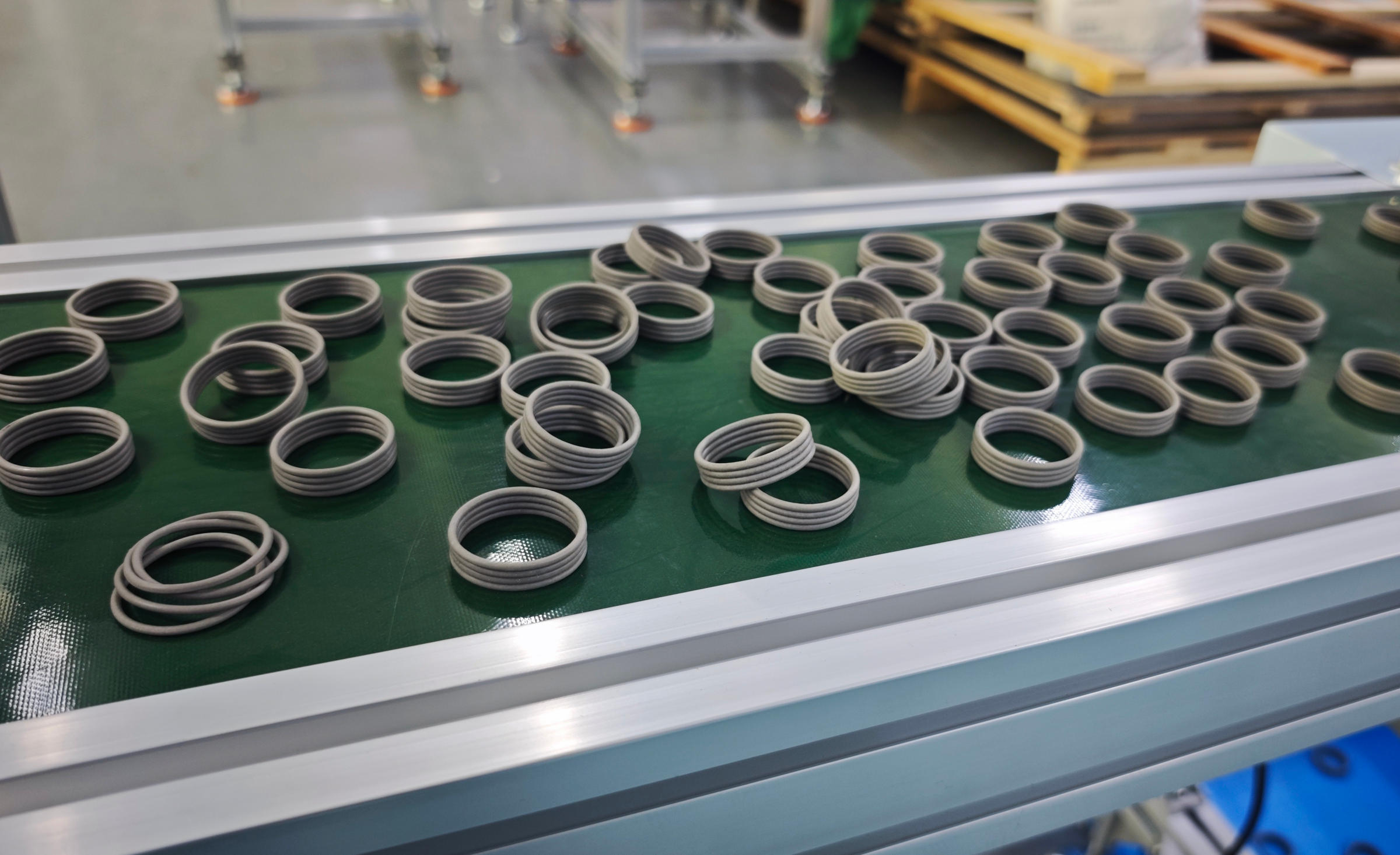
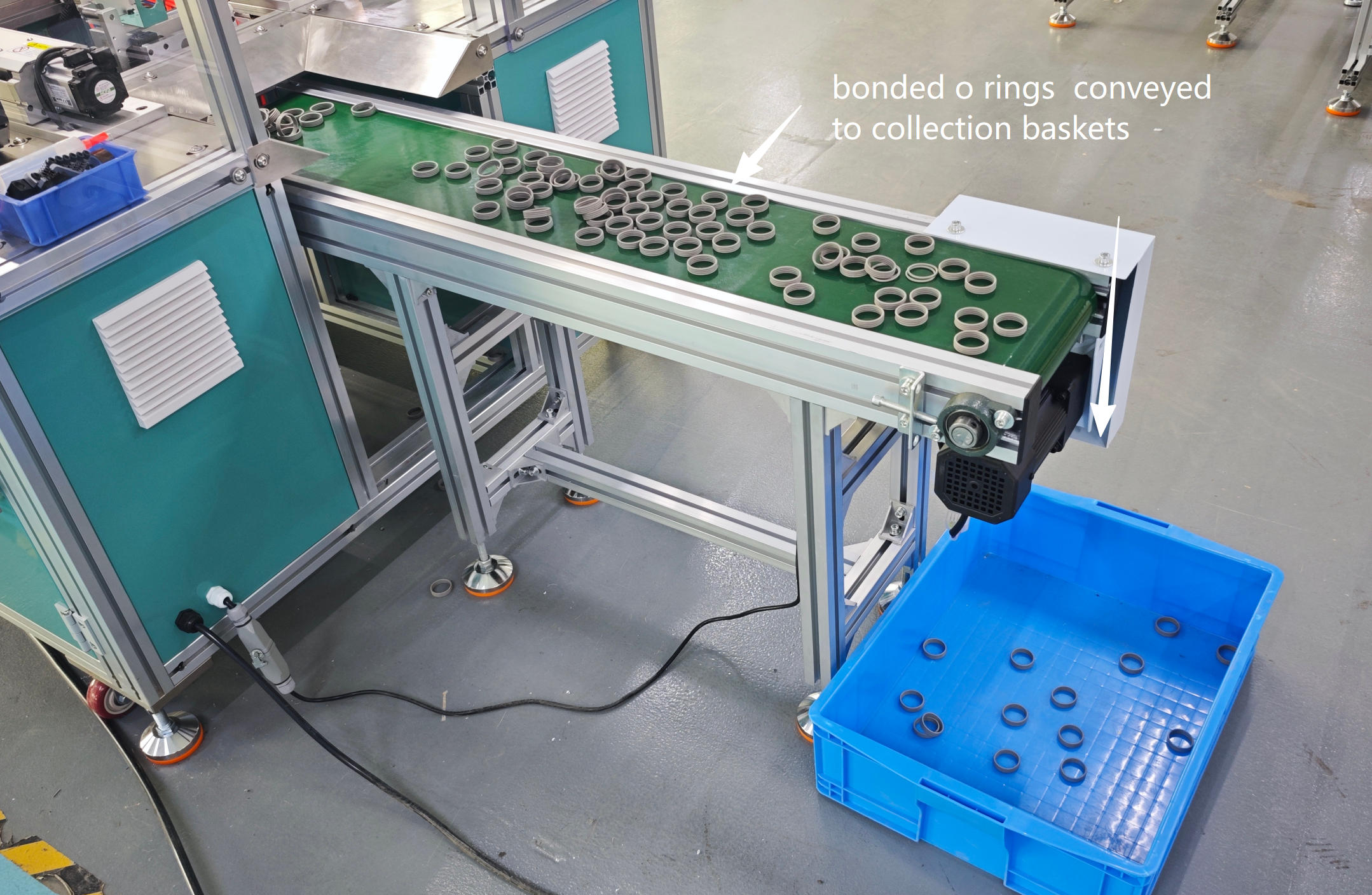
The stated productivity is approximately 900–1,200 pieces per hour under suitable production conditions. Actual output depends on gasket size, material, operator workflow, cycle settings and inspection requirements; confirm the target using representative samples.
A dedicated mold cavity designed around the gasket profile helps position both ends during bonding and supports more consistent joint alignment. Final joint quality still depends on material preparation and process control.
Operators can adjust cutting length to make different ring sizes, subject to the machine’s supported range and tooling setup. This helps manufacturers handle multiple specifications without relying entirely on manual cutting.
Automatic feeding and cutting can reduce variation associated with manual measurement. Define the required tolerance with the equipment supplier and verify it through a production trial; no numerical tolerance should be assumed without test data.
Automatic feeding, cutting, adhesive application, hot-mold bonding and discharge can organize several repetitive steps into a more consistent workflow. The appropriate configuration depends on profile dimensions, expected output, changeover frequency and quality-control needs.
They are used for selected low-pressure sealing, dust protection, cushioning and gap filling in automotive electronic and exterior housings, such as camera housings, sensors, HVAC components and auxiliary lamp assemblies.
Silicone sponge has a cellular structure and is generally softer and more compressible, which can help fill gaps with lower closing force. Solid silicone O-rings are typically used in different groove designs and pressure conditions. The correct choice depends on the application.
No. The stated product information does not recommend them for engine oil, gasoline, high-pressure hydraulic service or strong solvents.
The reference specification lists a continuous operating range of -50°C to +200°C and a short-term peak up to 220°C. Confirm the selected compound’s data and validate it under actual conditions.
Yes. Inner diameter, cross-section, color and other dimensions can be discussed according to the customer’s drawing and required tolerances.
The reference recommendation is 20%–40%. The appropriate compression depends on the foam grade, housing design and sealing target. Avoid exceeding 45% unless application testing supports it.
The product information indicates IP54–IP65 may be achievable with a suitable housing and compression design. An IP rating applies to the tested assembly, so the complete product must be validated.
Low-outgassing formulas and optional UL 94 HB / V-0 grades are listed as possible options. Availability and compliance must be confirmed for the selected compound and required test standard.
The described process automatically cuts the profile to length, applies adhesive to both ends, places the ends in a matched hot mold and bonds them under controlled heat. Process settings must be validated for the selected material.
Please provide the profile drawing, material and hardness or density, cross-section dimensions, target ring sizes, required output, joint-quality expectations and any inspection criteria. Sample profiles are helpful for a production trial.
Looking for a production solution for closed-cell silicone sponge O-ring gaskets for automotive components? We can discuss an automatic cutting and bonding setup based on your profile dimensions, target ring sizes, required output and quality expectations.
Send us your drawings, material details, sample profiles, target production capacity and gasket application requirements. We can then review the suitable machine configuration and discuss a sample trial and quotation.
Related equipment: Small-Size Silicone Foam O-Ring Gaskets Fully Automatic Cutting and Joining Machine


 Home


 +86 18811880172
 info@sisealpro.com