
Custom Silicone Extruded Seals
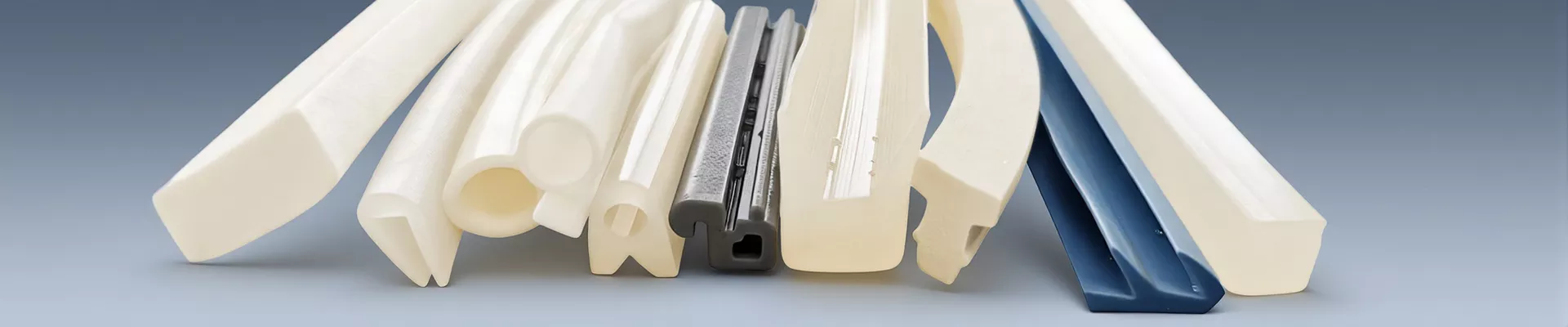
Profiles With Post Processing
Profiles With Post Processing
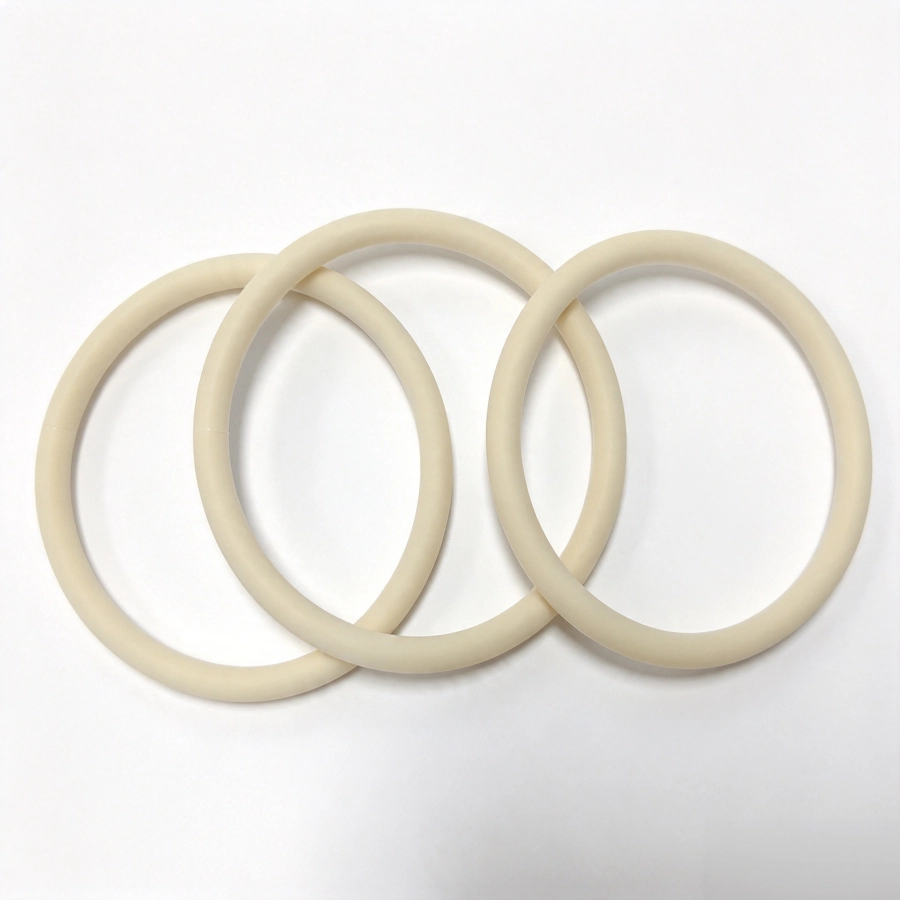

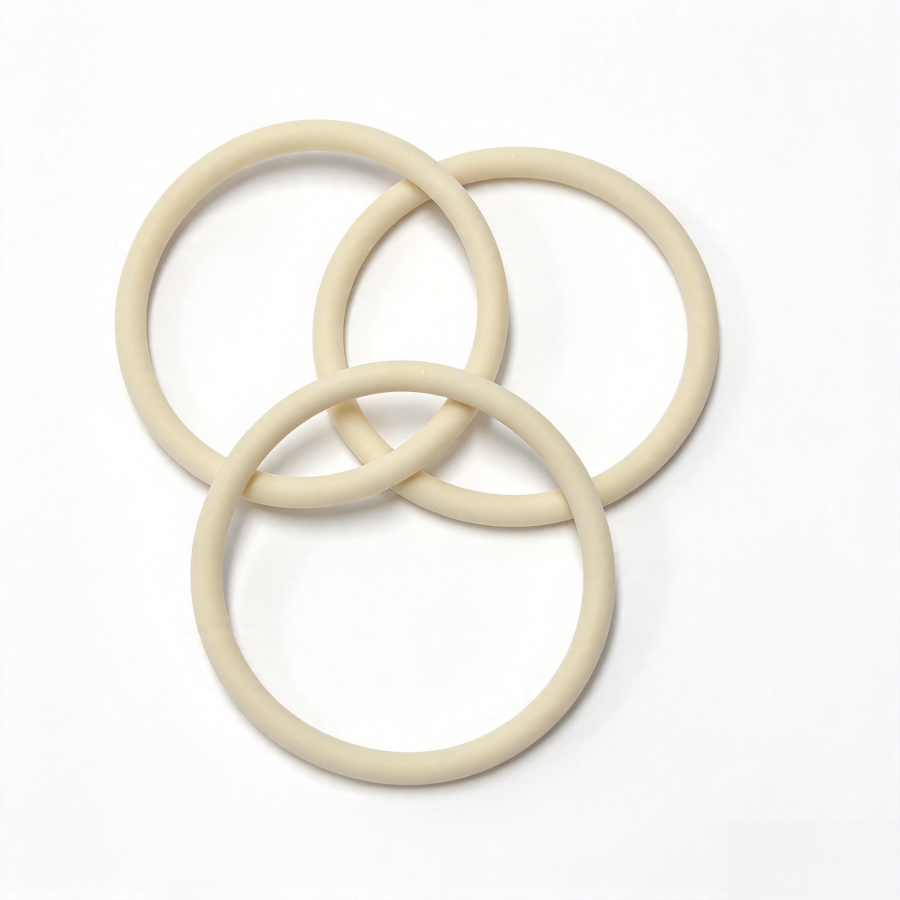
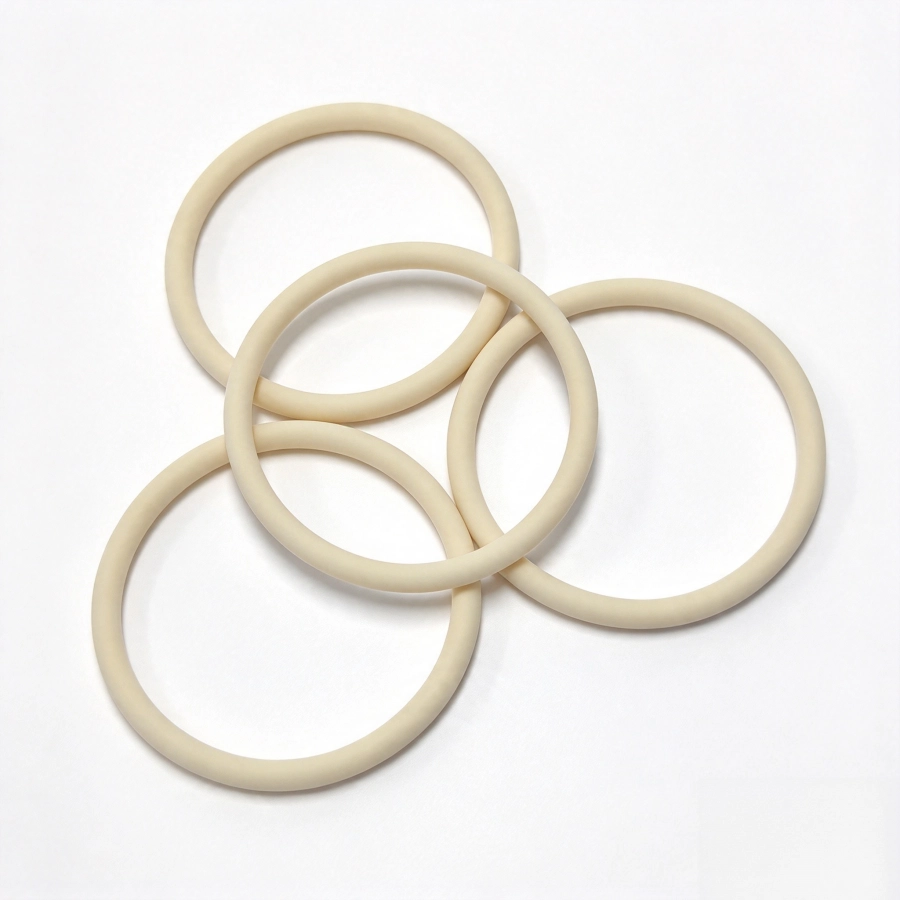
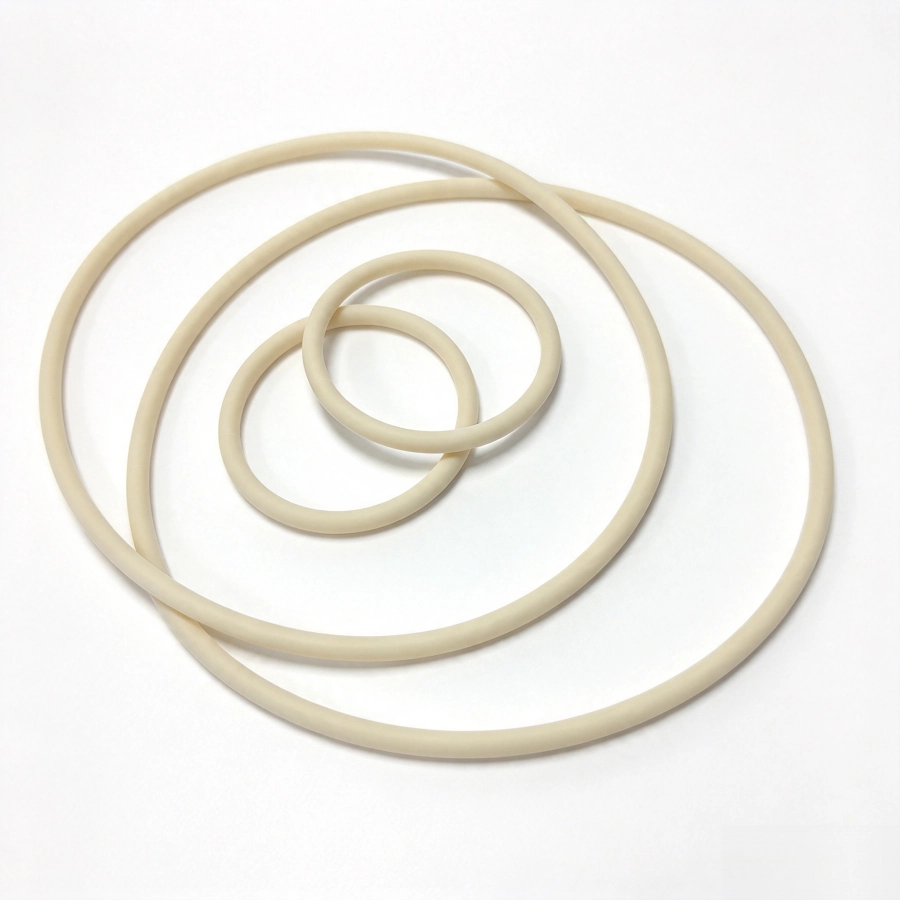

EPDM Sponge Rubber Sealing Rings are flexible cellular rubber components designed for sealing, cushioning, and gap-filling applications. With a soft, resilient structure and a smooth outer surface, these rings can conform to mating surfaces and help reduce gaps when properly compressed.
EPDM Sponge Rubber Sealing Rings for Automotive Applications can be considered for selected automotive components that require flexible sealing, vibration cushioning, or protection against the ingress of dust and moisture. Suitability depends on the material formulation, cell structure, compression requirements, and operating environment.
EPDM rubber is generally known for its resistance to ozone, weathering, and outdoor exposure. These characteristics make it a potential material choice for automotive sealing applications where environmental resistance and flexibility are important.
Youtube video
how sponge rubber o rings are being made by fully automatic bonding machine
Our sealing rings can be customized according to customer drawings, samples, cross-sectional profiles, and dimensional requirements.
EPDM sponge rubber profiles may be suitable for selected automotive components requiring gap filling and flexible sealing. The final design should account for compression, installation space, and environmental exposure.
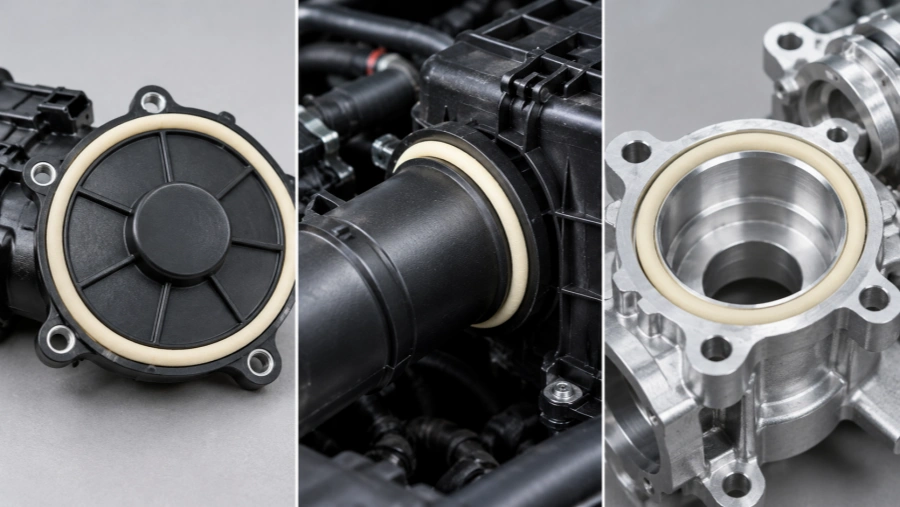
Depending on the material grade and product design, sponge rubber seals may be considered for certain door, body, and enclosure sealing applications. Weather sealing performance should be verified under the intended operating conditions.
Sponge rubber sealing components may be used in selected HVAC housings, air ducts, and related assemblies where gap sealing and cushioning are required. Material compatibility and temperature requirements must be confirmed for each application.
For automotive manufacturers and component suppliers, custom sponge rubber sealing rings can be developed to match specific drawings, dimensions, and assembly requirements.
Note: These are potential application areas, not a declaration that every EPDM sponge rubber grade is suitable for automotive use. Material specifications and application performance should be validated before production.
The following table presents preliminary reference specifications for the described sponge rubber sealing ring. These values must be confirmed by material testing before being used as guaranteed product specifications.
|
Parameter |
Preliminary Specification |
|
Product Name |
EPDM Sponge Rubber Sealing Ring |
|
Base Material |
EPDM, subject to material verification |
|
Material Type |
Flexible Cellular Rubber |
|
Color |
Beige / Off-White |
|
Cell Structure |
Fine cellular structure; open-cell or closed-cell type to be specified |
|
Surface Finish |
Smooth outer skin |
|
Density |
70–100 kg/m³ |
|
Hardness |
35–45 Shore 00 |
|
Compression Deflection at 25% Compression |
20–40 kPa |
|
Compression Set |
Target range: 30–45%; test conditions to be specified |
|
Elongation at Break |
Target: 150–180% |
|
Continuous Service Temperature |
Preliminary target: −20°C to +70°C |
|
Intermittent Service Temperature |
Up to +90°C, subject to validation |
|
Water Absorption |
To be tested |
|
Weather Resistance |
To be verified for the selected formulation |
|
Ozone Resistance |
To be verified through product-specific testing |
|
Joint Method |
Adhesive bonding |
|
Adhesive |
502 instant adhesive, as specified |
|
Product Form |
Custom Sealing Rings / Gaskets |
|
Dimensions |
Customized according to drawings or samples |
For automotive applications, additional requirements may include temperature cycling, compression set, fluid compatibility, dimensional stability, odor or emissions requirements, and durability testing. Applicable tests should be determined by the customer's specifications and the intended application.
The cellular structure allows the rubber to compress and recover under suitable conditions. When correctly designed and installed, EPDM sponge rubber sealing rings can help accommodate surface irregularities and reduce gaps between mating components.
EPDM rubber generally provides good resistance to ozone and weathering. This can be beneficial for components exposed to outdoor environments, although actual performance depends on the formulation and product design.
EPDM sponge rubber sealing rings can be manufactured in different circumferences and cross-sectional profiles according to customer drawings or samples. Custom dimensions help manufacturers match the requirements of individual assemblies.
For ring products made from extruded rubber strips, adhesive bonding joins the two ends to form a closed ring. Proper cutting, adhesive application, curing, and joint inspection help improve manufacturing consistency. Bond strength and sealing reliability should be validated for the selected material and application.
Manufacturers processing extruded sponge rubber profiles can use a Sponge Rubber O-Ring Fully Automatic Cutting and Bonding Machine to integrate cutting, bonding, and joint inspection into one production process.
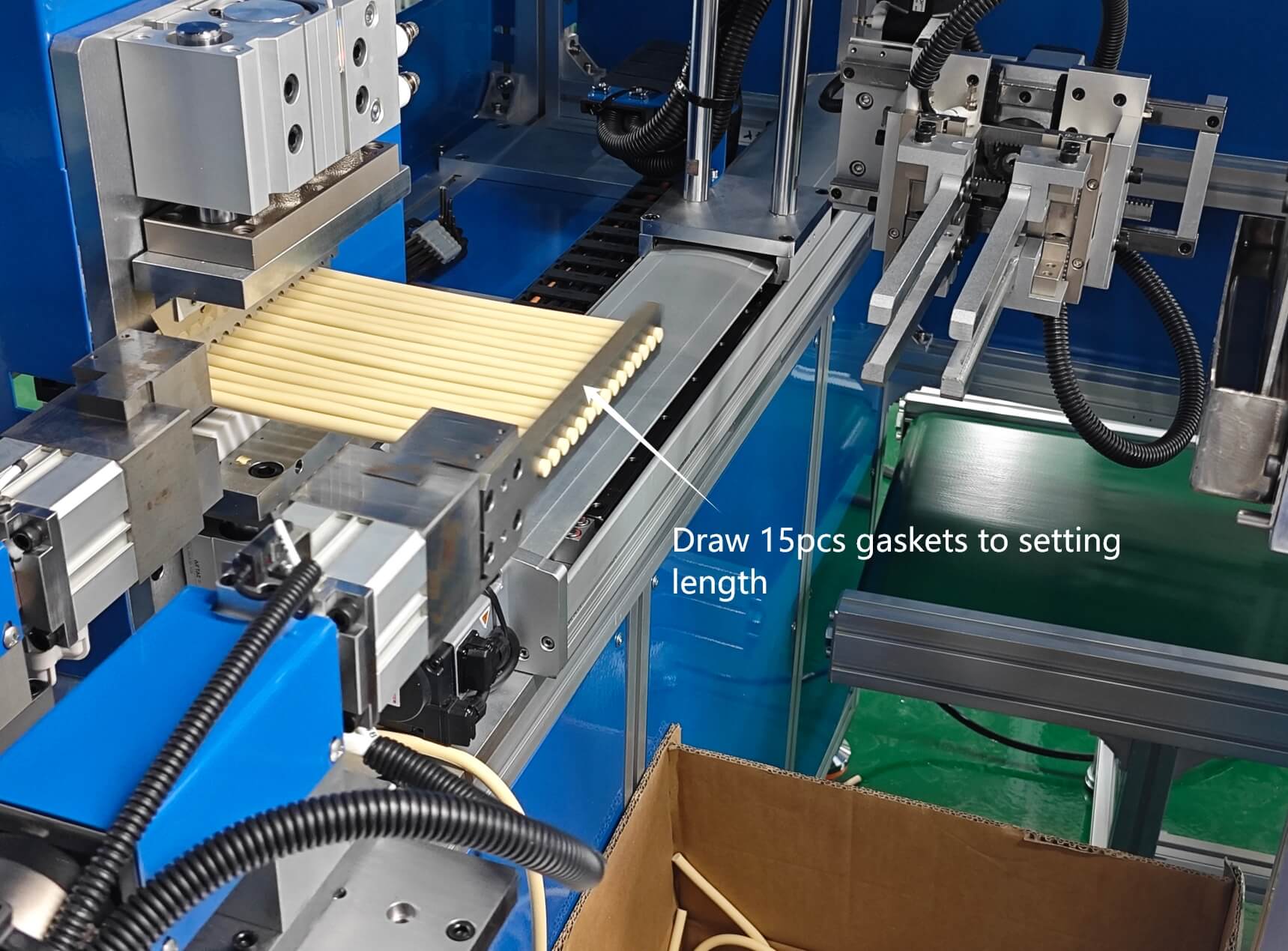
The machine feeds and cuts sponge rubber strips to a preset length. By adjusting the cutting length, operators can produce rings with different circumferences, subject to the machine's operating range.
The described configuration processes 15 sponge rubber strips in one cycle.
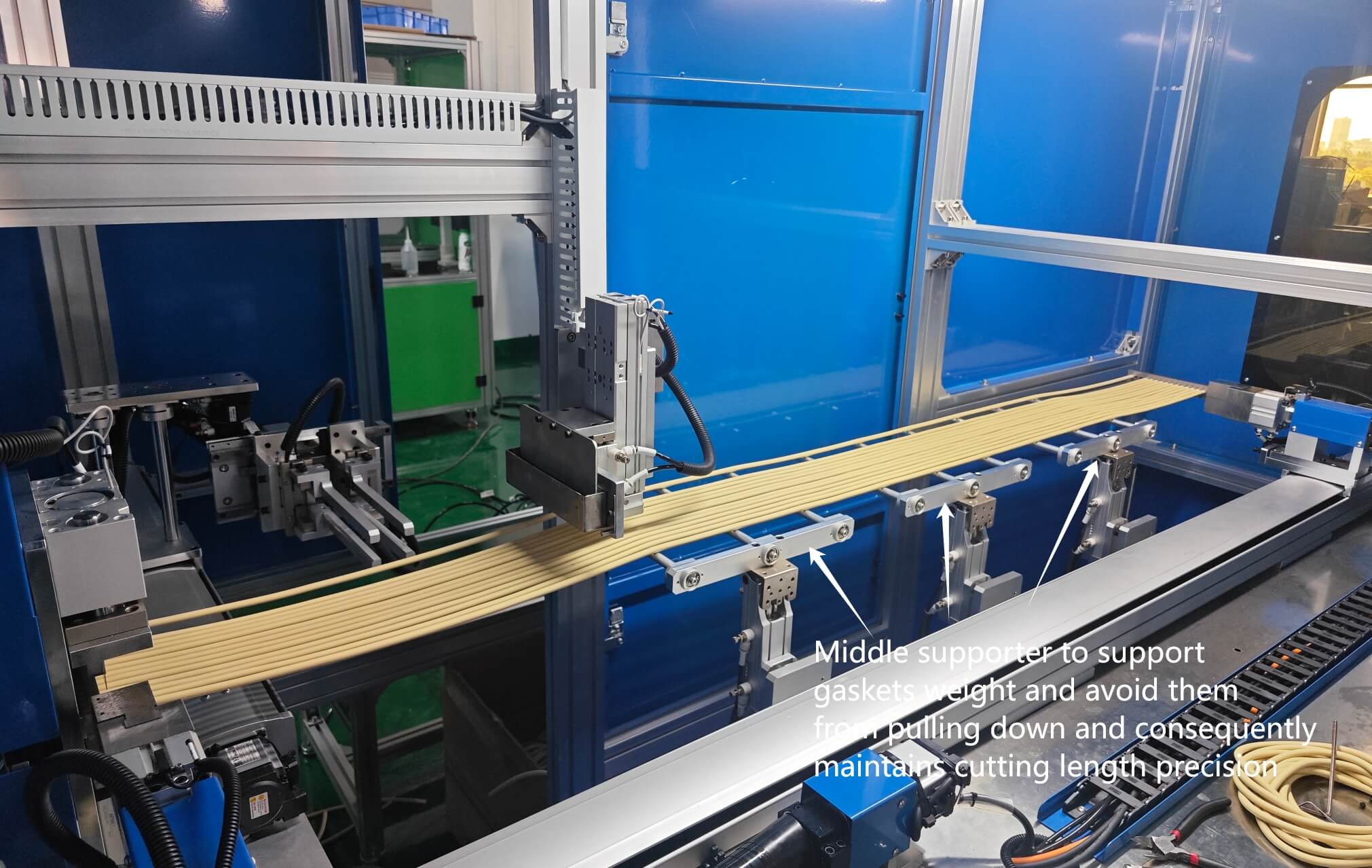
For cutting lengths above 1 meter, the middle support rises to help prevent the strips from sagging under their own weight, reducing the risk of cutting-length variation.
The cut ends are dipped in the specified instant adhesive. Two gripping hands then bring the ends together to form a closed ring.
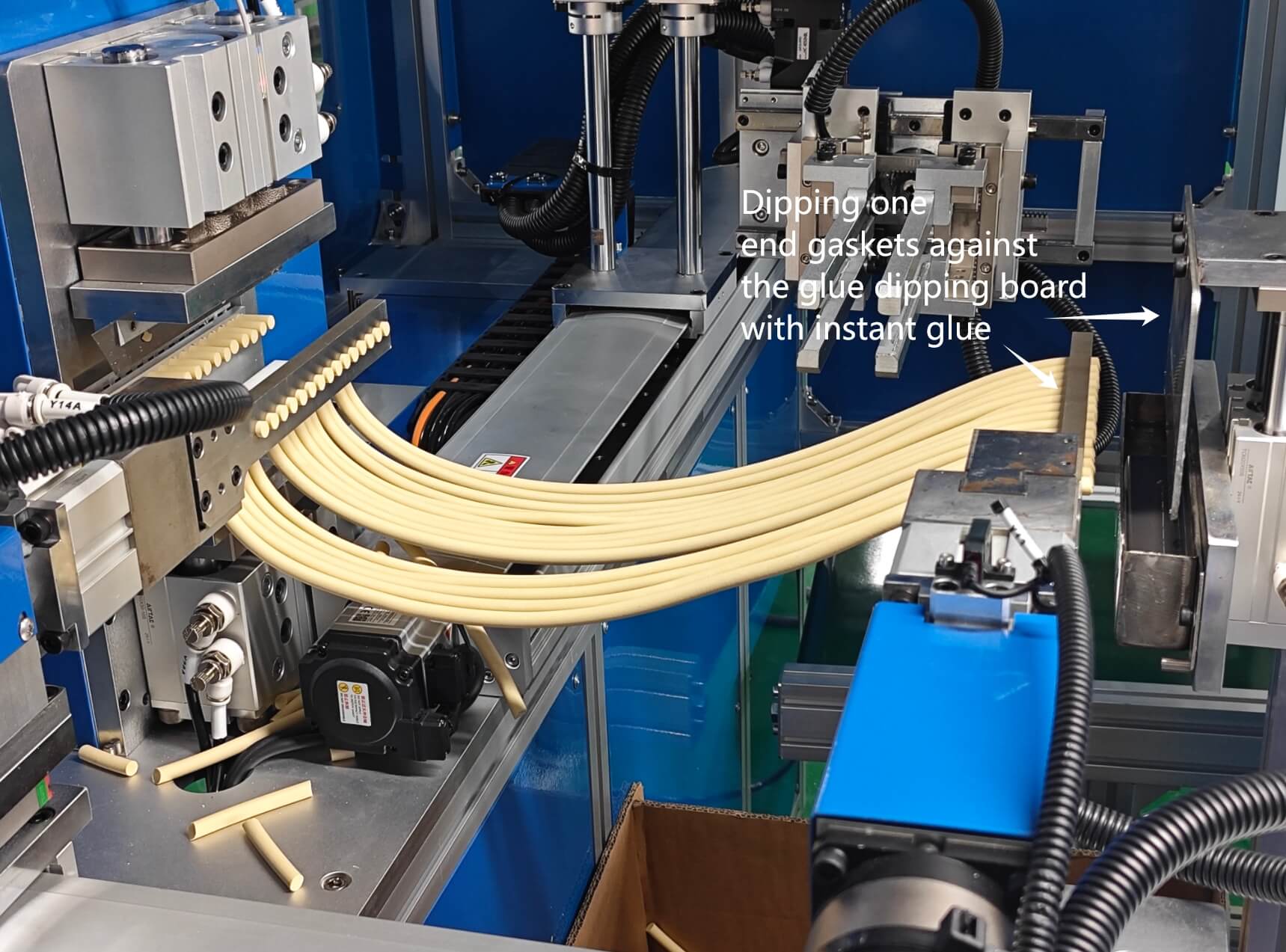
Proper alignment, adhesive compatibility, application quantity, and curing conditions are important to achieve the required joint quality.
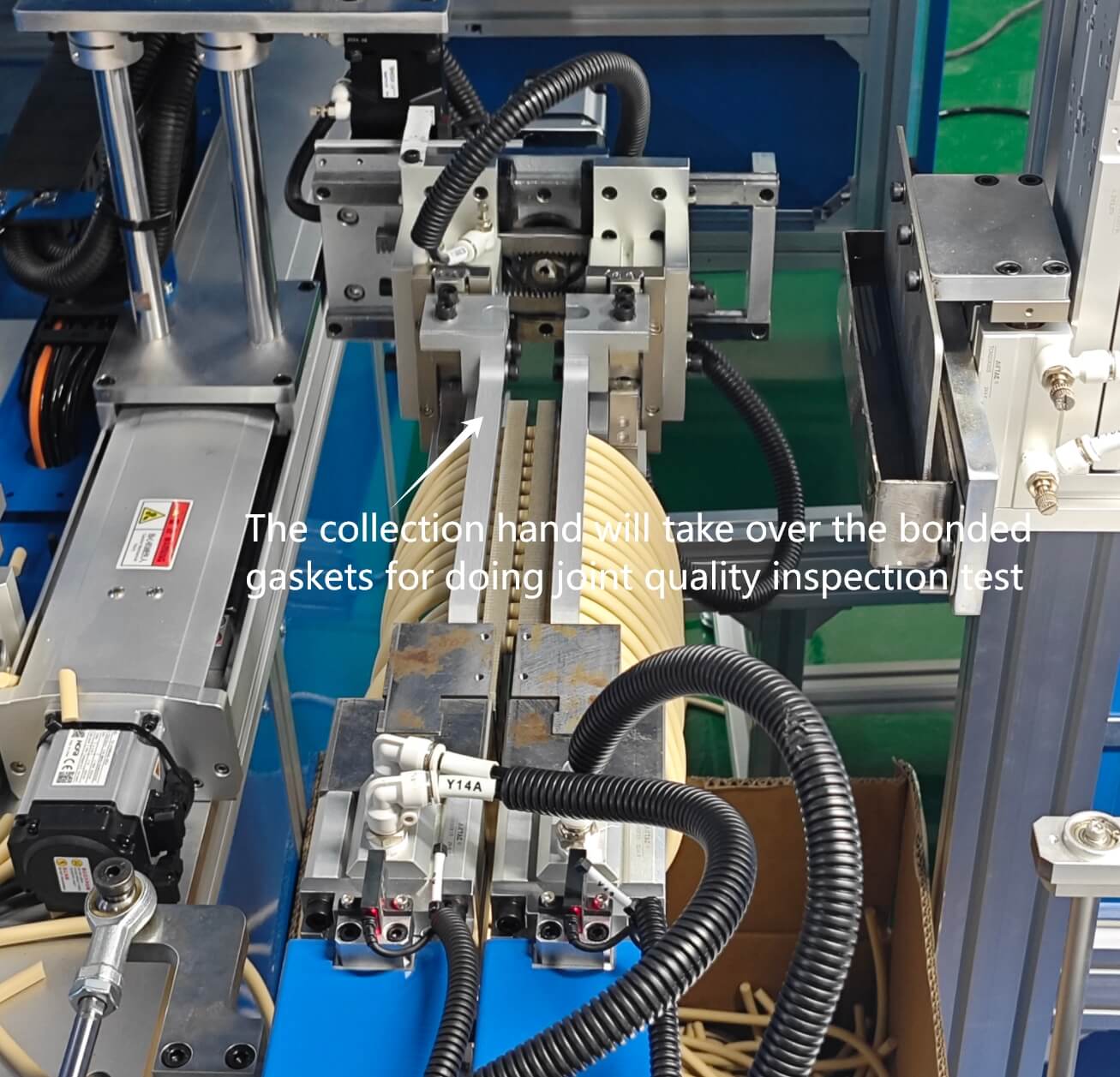
After bonding, each ring undergoes a pulling test at the inspection station. Rings that fail the configured inspection criteria are separated, while those that pass are collected for subsequent packing.
YOUTUBE VIDEO:
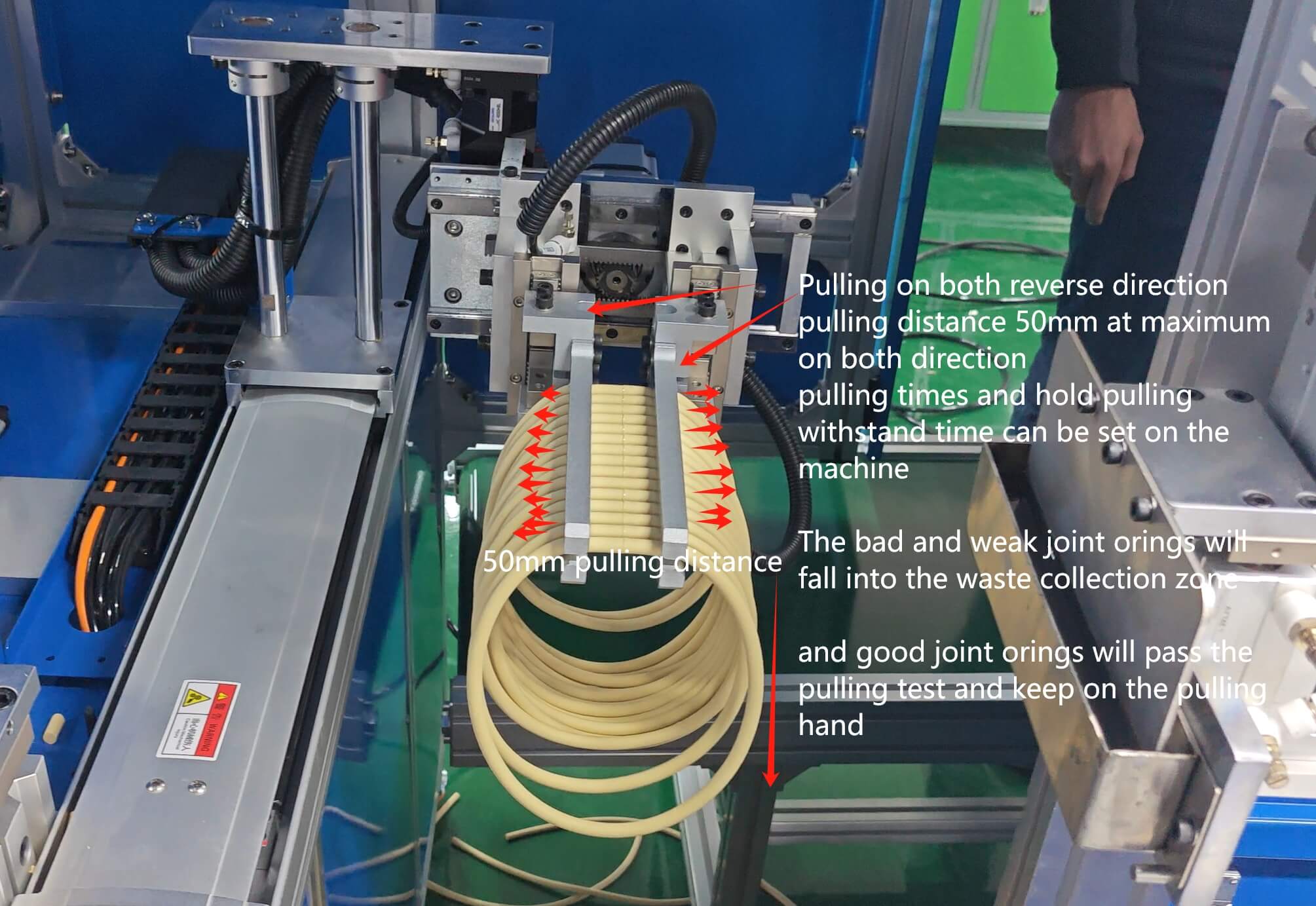
This process helps identify weak joints and reduces manual handling during inspection. A pulling test evaluates joint integrity under the specified test conditions; it does not independently guarantee long-term sealing performance.
Why Choose Our Automatic Cutting and Bonding Solution?
1,Integrated production process: Combines cutting, adhesive bonding, and joint inspection.
2,Adjustable cutting length: Supports different ring circumferences within the machine's operating range.
3,Multi-strip processing of high productivity : Processes 15 sponge rubber strips in one cycle in the described configuration.
4,Support for longer strips cutting length precision : A rising middle support helps reduce sagging during cutting lengths above 1 meter.
5, Automatic joint inspection: Identifies rings that fail the configured pulling-test criteria.
6,Customised configuration: Machine setup can be discussed according to rubber profile dimensions, target ring sizes, and production requirements.
For automotive component suppliers, the machine configuration and bonding process should be evaluated against the actual material, dimensional tolerances, production volume, and customer quality requirements.
Frequently Asked Questions
They are used for flexible sealing, cushioning, and gap filling. Potential applications include selected automotive components and industrial assemblies, subject to material and application validation.
They may be suitable for selected automotive applications, depending on the rubber formulation, cell structure, operating temperature, compression requirements, and applicable customer specifications.
Yes. Ring circumference, cross-sectional dimensions, and other product requirements can be specified according to drawings or samples, subject to manufacturing feasibility.
Sponge rubber contains a cellular structure that can provide compressibility and cushioning. Solid EPDM is denser and behaves differently under compression. The appropriate material depends on the sealing design and performance requirements.
Extruded sponge rubber strips are cut to the required length, their ends are bonded together, and the resulting joints can be inspected before packing.
Different cutting lengths can be configured for different ring circumferences. The available size range depends on the machine configuration and the rubber profile.
The described configuration processes 15 strips in one cycle. Actual production output depends on the machine setup, strip dimensions, bonding cycle, and inspection requirements.
The machine uses a pulling-test inspection process to separate rings that fail the configured test criteria. The test force and acceptance criteria should be established according to the application requirements.
Useful information includes material grade, cross-sectional drawing, ring dimensions, compression requirements, operating temperature, environmental exposure, and any customer-specific automotive standards or test requirements.
Please provide the rubber profile dimensions, required ring circumferences, material information, target production capacity, and joint quality requirements. These details help determine a suitable machine configuration and validation plan.
Looking for a solution for EPDM sponge rubber sealing ring production?
Whether you are developing custom rubber gaskets or processing extruded sponge rubber profiles, we can discuss the appropriate cutting, bonding, and inspection setup based on your product requirements.
Contact us with your drawings, rubber profile dimensions, and production targets and gaskets application requirement to discuss your project and request a quotation.


 Home


 +86 18811880172
 info@sisealpro.com